

A few days ago, a ship belonging to one of the world’s leading shipping companies sailed from South Korea to the Port of Tacoma in the United States. It has sailed nearly 4,700 nautical miles. When it finally arrived, the ship was denied and ordered to return to South Korea immediately. As a result, the company caused millions of dollars in direct and indirect losses. Surprisingly, this was already the 11th ship denied entry to the U.S. through Tacoma that year for the same reason.
Could you believe that a tiny moth caused all this trouble?
This insect is the “Flighted Spongy Moth” (Lymantria dispar asiatica). This moth was once known as the Asian Gypsy Moth, but its name changed because the word “Gypsy” was considered offensive.
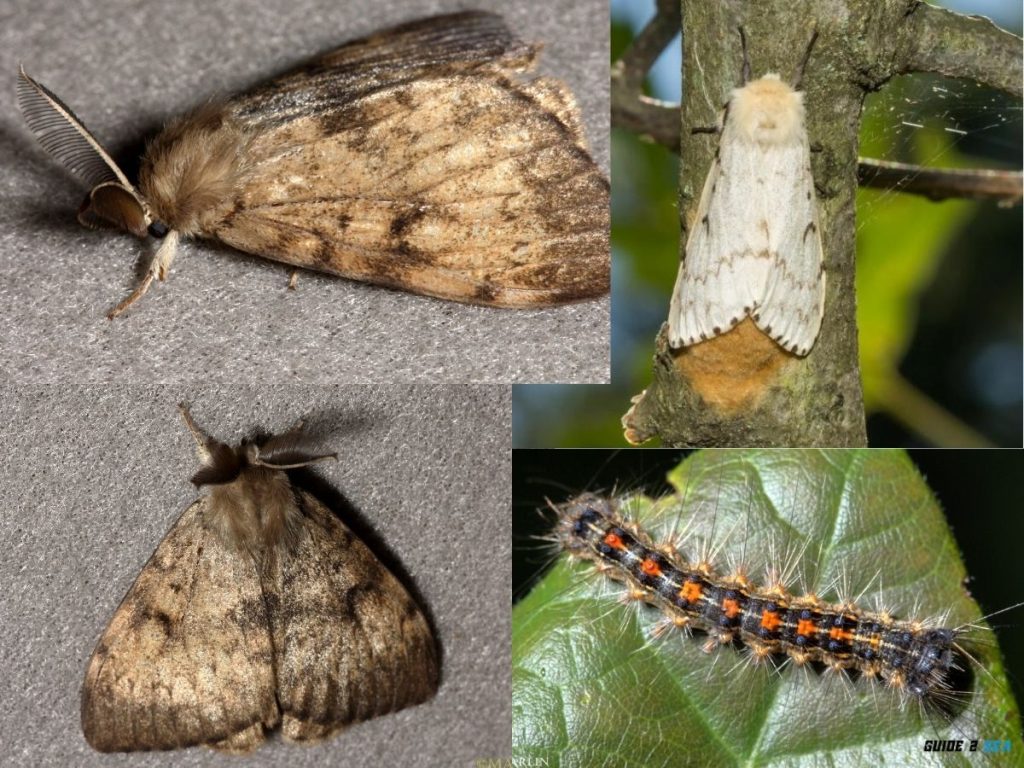
The Flighted Spongy Moth Complex (FSMC) is a group of moth species that live in the forests of China, Korea, Japan, and eastern Russia. These insects are highly destructive. They can fly up to 40 kilometers and feed on over 500 kinds of trees and plants. They are considered one of the world’s most dangerous and invasive pests due to their rapid reproduction.
When ships visit ports in these Asian countries, the moths get attracted to the bright lights on the vessels, especially during the summer months. They fly to the ships and lay eggs in hidden places like decks, containers, or even under paint. The eggs can survive for months, even through bad weather. So, when the ship travels to another country, those eggs might hatch later and spread the moths there.
If these insects enter a new country or a new environment, they can cause serious damage to plants, trees, and the ecosystem. That’s why countries like the United States, Canada, New Zealand, Chile, and Argentina have introduced strict inspection and certification procedures for vessels departing from FSMC regions.
Now you might wonder why countries like the United States are so concerned about a small insect that naturally lives in Asian countries. The reason is that in those Asian forests, the moths have natural predators and bacteria that control their population. But countries like the United States, Canada, New Zealand, Chile, and Argentina do not have natural predators, bacteria, or viruses to defend against these moths.
If these moths spread in such places, they can cause severe destruction to trees, plants, and agriculture. The loss to the environment and economy could be massive.
Hard to believe, isn’t it? That such a small moth could cause such massive damage to the global shipping industry.
Sources:

