The expansion of technology and transportation caused globalization, which affected every corner of the world. This influence caused a vast transformation in the maritime industry. The increase in global trade among nations led to the development of various types of vessels. By today, around 90% of the world’s cargo is transported by marine vessels. These vessels must be registered or licensed under the jurisdiction to consider the nationality of the vessel. Because they need a clear legal identity and regulatory framework. That is where the concept of a flag state becomes essential.
Understanding the flag state is essential for everyone who is involved in maritime law, ship registration, shipping management, or international trade. The article will give a clear understanding of what a flag state is.
What is a Flag State?
In the maritime industry, the term “flag state” is the country under whose law a ship is registered and operates. Regardless of the type, size, and purpose, every seagoing vessel must be registered under a flag state. When a ship is registered, it is called “flying the flag” of a particular nation or country, which means that the vessel is legally bound to that country’s regulation.
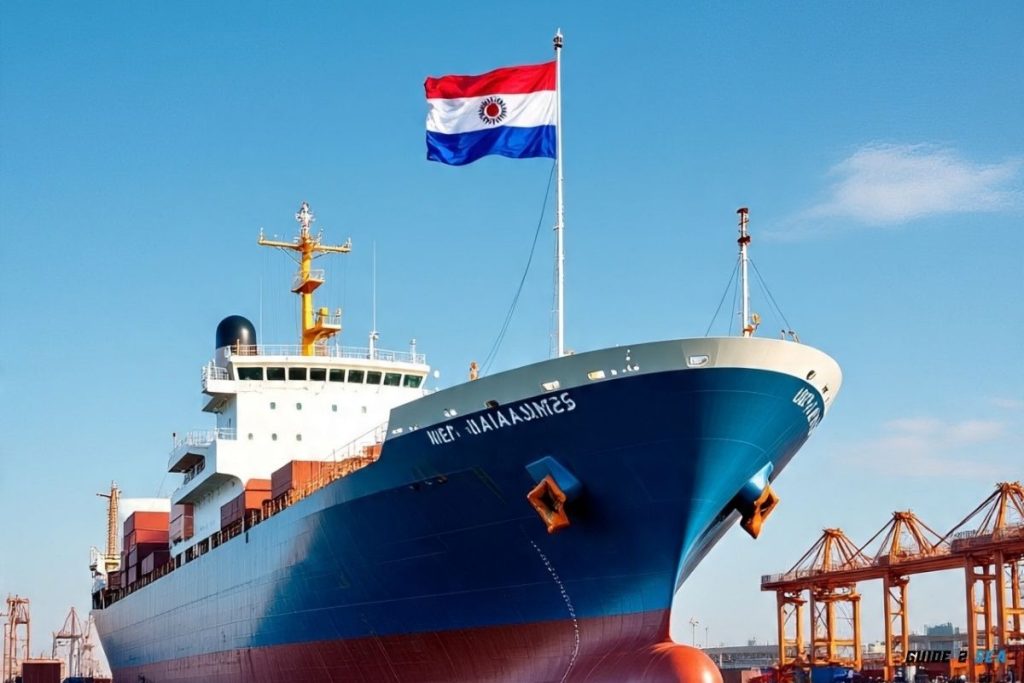
The flag state plays a significant role in the world shipping operation. With ship registry, a flag state is the responsible authority to ensure that a ship complies with both national and international maritime rules and regulations. You may have noticed that ships are flying under different flags. Choosing a flag state is more than just a formality.
The flag state included rules and regulations related to safety, technical standards, crew working conditions, and environmental protection that a ship must follow. Under the context of ship registration, shipowners often choose to register their ships in the countries that offer beneficial conditions such as lower tax benefits, flexible labor laws, and easier compliance procedures. In short, flag states play a significant role in ship registration, standing in as the legal home for ships and determining the duties and responsibilities at sea.
What are the types of flag states?
In the maritime field, the flag states generally can be categorized into two main types based on how ships are registered.
1. National Flag states / National Ship Registry
Simply, national or traditional flag states refer to the registration of ships that are built in the country itself. This means ships are built and registered under the same flag. However, shipowners must have a legal and often physical connection to the country of registration.
A national flag state or national ship registry is often called a traditional flag state/traditional ship registry or closed ship registry/closed flag state. These flag states usually have strict rules and regulations to cover safety, environmental protection, crew welfare, and operational standards. Ships under national flags are often liable to have regular inspections. The United States, Japan, Norway, and India can be identified as some common countries for national flag states or national ship registration.
2. Flag of Convenience (FOC)
Flags of convenience (FOC) are the countries that allow foreign shipowners to register their ships under their countries. Simply, a flag of convenience means that ships are built in one country and registered in another country that offers easier registration procedures, lower taxes, and less strict regulations. The flag of convenience is the most common type of ship registration in the world. A flag of convenience is also called as, “open registry” or “international ship registry.”
Liberia, Panama, Malta, and Hong Kong are some common flags of convenience in the world.
Role of a Flag State
- As a ship involved in global trade, she cannot be unlicensed or unregistered, as she spends most of her lifetime at sea. As a consequence, the flag state plays a vital role in the governance and regulation of ships that are registered under its flags to ensure that they comply with both national and international maritime conventions such as SOLAS, MARPOL, and MLC.
- One of the key duties of the flag states is to certify the seaworthiness of their ships. This includes regular inspections of ships’ construction, equipment, manning levels, and operational status, and issuing safety certificates to confirm that vessels have complied with the expected standards.
- Another important duty of a flag state is ensuring crew welfare. The flag states must ensure that all the seafarers working onboard are well trained and hold the required qualifications and experiences to survive onboard. They (flag states) also must confirm that all seafarers receive proper working conditions, fair wages, and enough rest times in line with international labor law.
- In addition, flag states are responsible for investigating maritime accidents or incidents. If a ship is flying under the registered flag, they are involved in the investigation of a collision, grounding, pollution, or any other maritime accident that occurs anywhere in the world. In such kinds of investigations, flag states are also responsible for examining the root cause, publishing reports, and improving safety measures.
- Flag states are also responsible for representing their fleet and creating the link between ship and international communities such as the International Maritime Organization (IMO), port state control (PSC), and classification societies to uphold shipping standards in the world.
- Another significant fact of flag states is the reputation. The reputation of a flag state influences how the ships under their flags are operated and treated in foreign ports. Ships from well-regulated flag states face fewer delays and inspections, while some poorly regulated flag states are subjected to stricter inspections under Port State Control (PSC).
Final Thought
The flag state is more than just a country under whose flag a ship flies. It determines which law a ship must follow to ensure safety, labor, and environmental standards, which is a central duty to maintain the order and safety at sea.
The types of ship registrations and the choice of different flags offer different types of benefits and challenges. Some flag states provide strong oversight and high standards, while some flag states offer easier registration and lower cost. The choice of flag directly affects how a ship operates, how she is treated in ports, and how fair and safe life is for the crews onboard.
Choosing a flag state is important as well as a challenging decision for ship owners. A good flag helps to keep the ship safe, support seafarers, and ensure smooth operations in the shipping industry.