There are various types of vehicles in the world. Cars, buses, and trucks are used to travel and transport goods by road, while airplanes, helicopters, and jets travel through the air. In the same way, there are vehicles that move across water. These are called “vessels” or “ships.”
With the globalization of the world, transportation has become an essential part of international trade. Today, more than 80% of global trade is carried out through sea routes. Among the different modes of sea transport, vessels and ships play a vital role in connecting countries and moving goods efficiently.
Here comes the question, “What is a ship, and what is a vessel?”
The terms “ship” and “vessel” are often used interchangeably, but there is a slight difference. “Vessel” is the general term that refers to any watercraft that can float and navigate on water. It can be a ship, boat, barge, or any other floating structure used for transporting goods or people.
Simply, a vessel is any seagoing watercraft designed to carry cargo, vehicles, passengers, or other materials from one place to another. They can transport dry cargo, liquid cargo, heavy machinery, and temperature-controlled items such as fruits, vegetables, flowers, and medicines.
While people often use the term “ship” in daily life, those in the maritime or shipping field prefer the word “vessel.” Let’s see what the different types of vessels are in the shipping industry.
Common Types of Vessels
Vessels are multipurpose and come in various types, shapes, or sizes for navigation, operation, transportation, or trade over ocean routes.
1. Container Ships
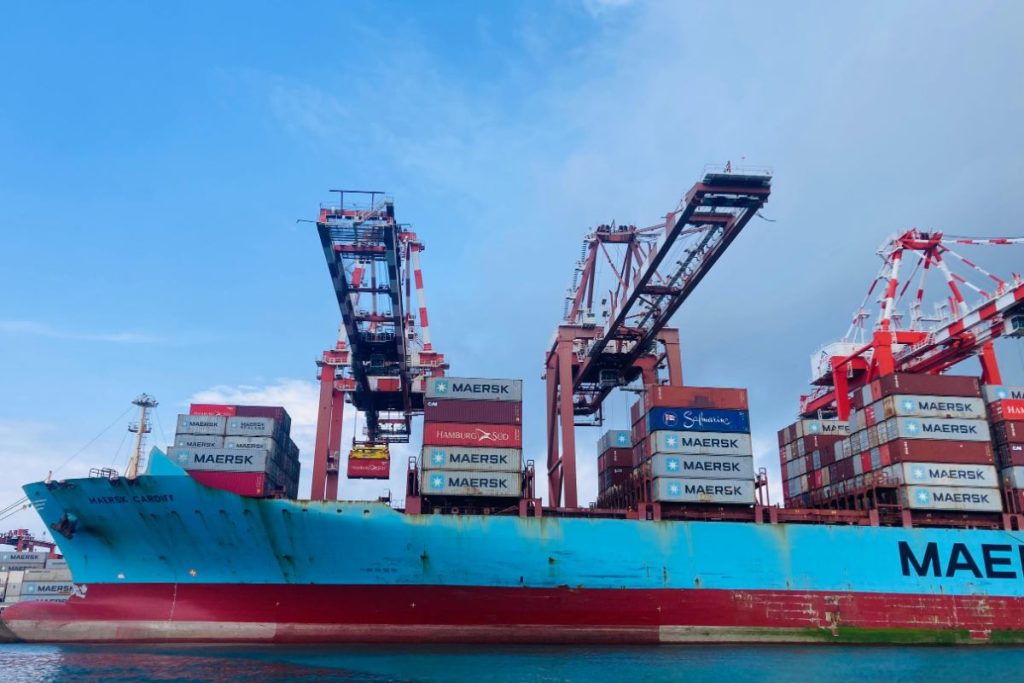
Container ships are a specific type of cargo vessel designed to transport standardized containers. These container ships are diverse and are classified based on their size and capacity, such as large vessels (LV), very large vessels (VLV), Panamax vessels, and more. Containers are secured by using twist locks, lashing rods, and turnbuckles to mitigate the damage during the transit of container ships. These container ships facilitate the fast and efficient movement of goods across the world through ocean routes.
2. Bulk Cargo Ships
Bulk cargo vessels are commonly known as bulk carriers. These types of vessels are designed to transport large amounts of unpacked goods such as ore, grain, iron, coal, and other raw materials, which enables hatches for safe loading of cargo. Bulk cargo ships have also come in various sizes. As an important part of global trade, bulk carriers play an important role by supplying essential raw materials for industrial purposes.
3. Tanker Vessels
Tanker vessels are also known as “tankers,” designed to carry liquid content or gases, especially in bulk. Widely prominent types of tankers, such as petroleum tankers, chemical tankers, and gas carriers, are designed to handle dangerous liquids that are easily flammable. In addition, vegetable oil and wine or alcohol are also transported in tankers. According to the size and capacity, the tankers are diverse. These vessels are designed with efficient piping and pump systems for loading and unloading of liquid.
4. RORO Vessels
Roll-on/roll-off vessels, or RO-ROs, are designed to transport wheeled cargo through the ocean routes, such as cars, buses, motorcycles, and trailers. These ships vary in size and shape, and using ramps, vehicles are directly driven on and off from the vessel, making the loading and unloading process highly efficient.
5. Passenger Vessel
A passenger vessel, also known as a “cruise ship,” is a specific type of vessel designed to move people from one place to another over water. These ships are equipped with great features for people from small ferries to large cruise ships to ensure comfort and safety during their journey. Passenger ships play an important role in global transport, providing unique travel experiences for people around the world.
6. Fishing Vessel
These types of vessels are especially designed for catching, processing, and transporting fish and other marine resources from rivers, lakes, and oceans. Fishing vessels are designed to operate in deep seawater, ranging in size and function from fishing boats to large fishing vessels. Modern fishing vessels are equipped with advanced techniques like GPS, sonar, and automatic fishing equipment. These vessels are important in the seafood industry.
7. Military Ships
Military ships are designed to be used by naval forces for defense, combat, inspection, and logistical support with advanced technology, weapons, and protective facilities to operate especially in various maritime activities. Military ships are equipped with sonar, a missile system, radar, and electronic war capabilities that support them to engage in marine security activities in national waters. These ships are to ensure the safety of the maritime trade route, prevent enemy forces, and provide significant assistance during operational procedures.
8. Specialized Vessel
Beyond the general cargo transportation or global trade, specialized vessels are designed for specific maritime activities. Research vessels, offshore supply vessels, and icebreakers are some of the specialized vessels. These ships are built with advanced technology, making them important for various marine industries and global operations. Specialized ships are designed to handle tasks that cannot be done by general cargo or passenger vessels.
Vessels can be defined as the backbone of the maritime industry, where they play an important role in transporting goods and people in the oceans and seas of the world. From small boats to large ships, they are built and designed to complete the unique perspective of their functions. Understanding what the basics of a vessel are and how it operates is important.